

Of all the questions that arrive in our inbox, this is the one with the most ideology attached. One camp insists digital cables cannot matter because the bits either arrive or they do not. The other describes night and day transformations from a network lead. Our honest position, after years of building USB cables and living with network audio every day, sits between the camps, and it starts with separating what these cables cannot do from what they demonstrably can.
What a digital cable cannot do
A USB or ethernet cable cannot improve the data. The file that leaves your computer is the file that arrives at the DAC, and if it arrives intact, the cable has added nothing to the music itself. No cable will reveal detail that is missing from the recording, widen a soundstage by rewriting the stream, or make a low bitrate file sound like a master tape. Error detection and retransmission are very good at their jobs, and anyone who tells you a cable made the zeros rounder is selling something. If your expectation is a different mastering of your favourite album, save the money.
What a USB cable genuinely changes
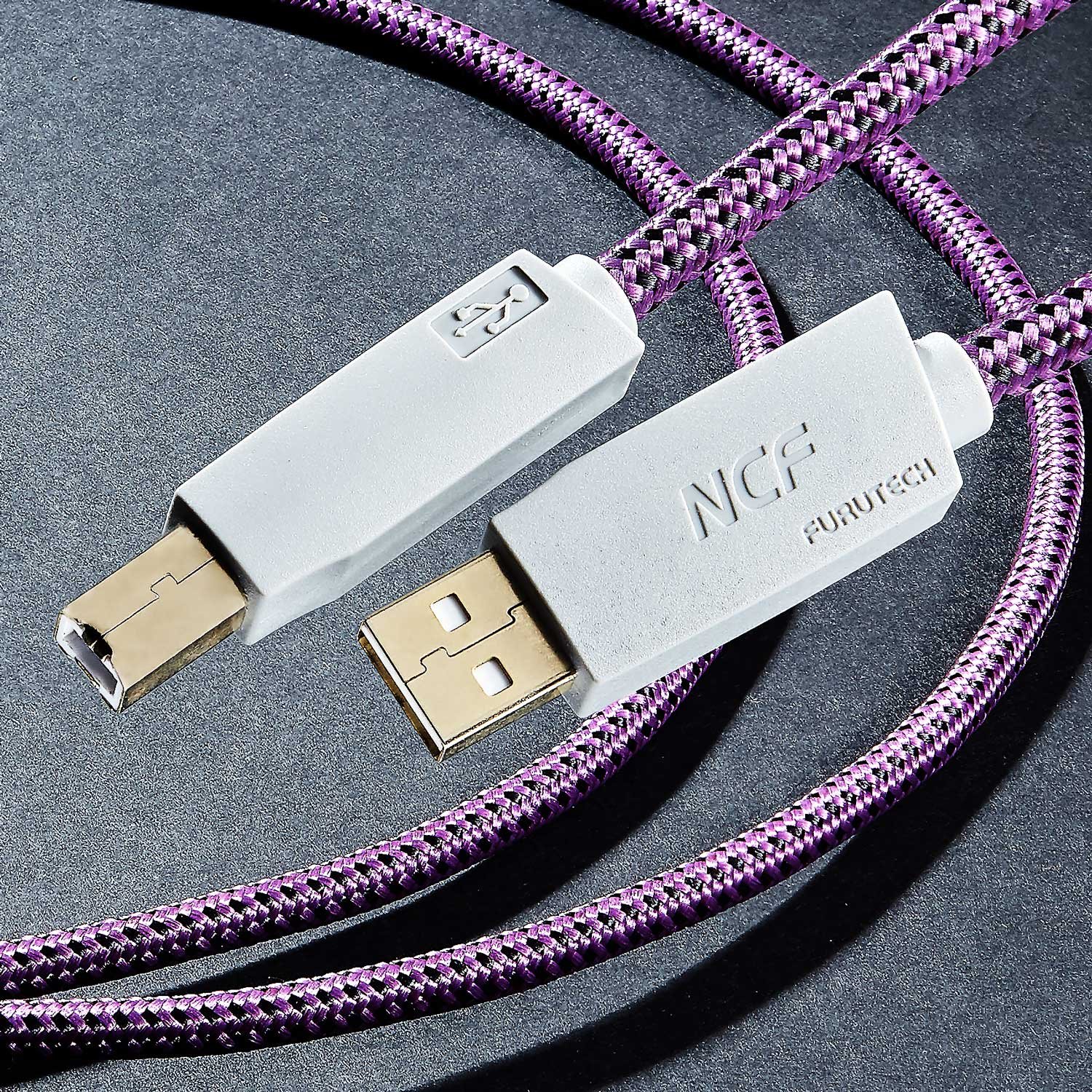
USB carries two things down the same jacket: data and five volts of power, and the trouble lives at the edges. The first issue is reliability. A marginal cable fails digitally rather than gradually: dropouts, clicks, a DAC that vanishes from the device list at high sample rates. Shorter and better shielded is the fix, which is why our USB cable length guide argues for the shortest run the desk allows. The second issue is noise. The computer end of a USB link is electrically filthy, and the cable is both the path the noise travels and an antenna that picks up more of it. A serious audio USB cable separates the data pair from the power leg, shields both properly, and keeps the junk from reaching the DAC's receiver. The Zonotone Grandio USB-2.0 does this with physically distanced power and data conductors under a double shield, and Furutech's GT2-NCF adds NCF damped connectors to the same brief.
What does that sound like? On a quiet system, the step from a free printer lead to a properly built USB cable presents as a cleaner, darker background and a touch less glaze on massed strings and cymbals. Subtle, real, and repeatable enough that we build USB cables on the same bench as everything else. For a USB-C laptop or DAC, the GT4-NCF covers the newer connector without an adapter in the chain.
Ethernet is a different argument
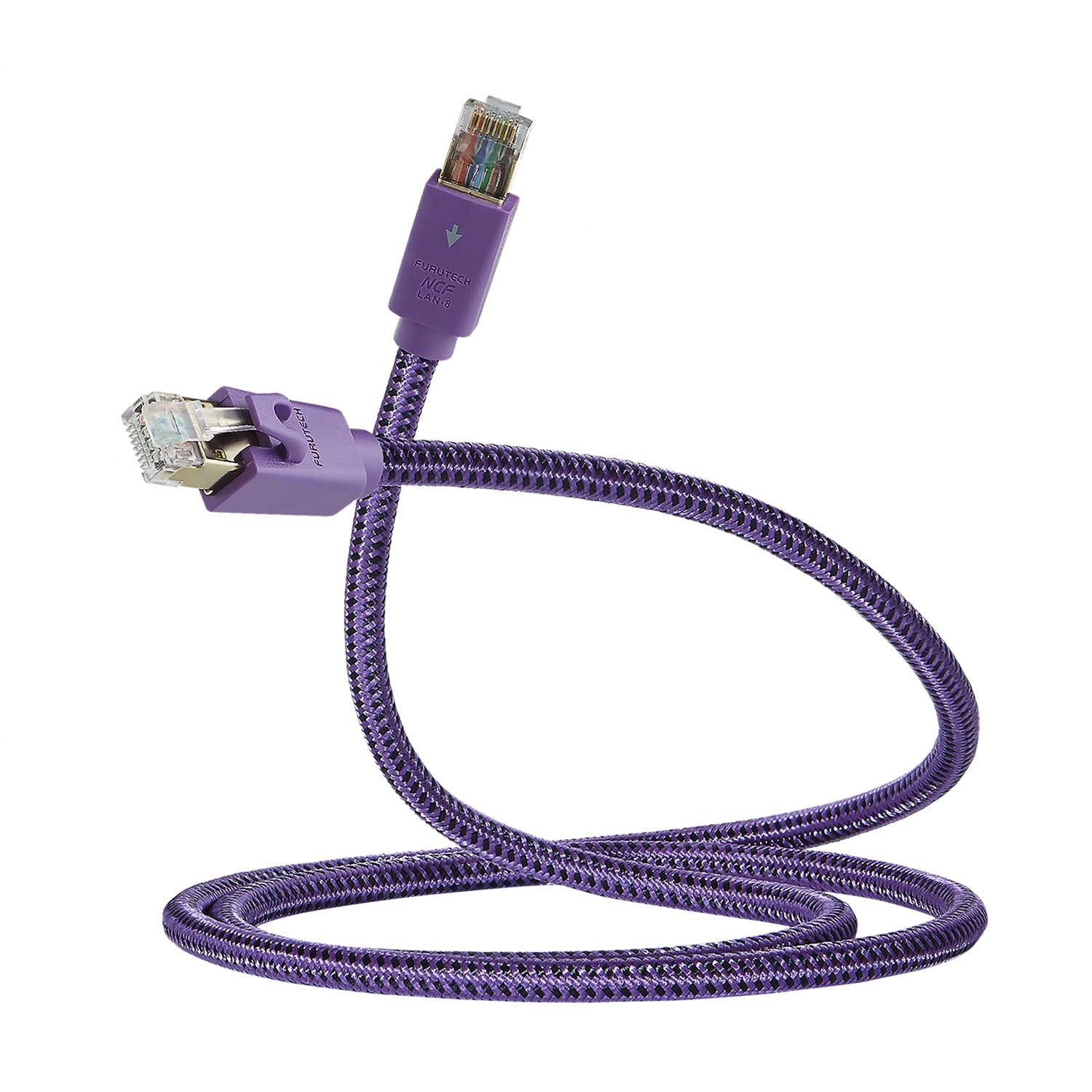
Network audio adds a wrinkle the sceptics often miss, and a comfort they should not. Ethernet is transformer coupled at both ends by design, so a cable cannot carry ground loops or DC noise the way USB can. In that narrow sense the bits camp is right: a streamer that sounds wrong over a five dollar patch lead usually has a problem elsewhere. But the whole chain still matters, because the router and the switch are noisy devices living in the same rack as your hi-fi, and the cable is the last metre of that environment. Shielding quality, conductor purity and connector build decide how much of the network's electrical hash rides into the streamer's chassis.
The Furutech LAN-8 NCF-Plus is what a network cable looks like when someone takes that seriously: a Category 8 rated design with individually shielded pairs and NCF-Plus damping in the connector bodies. In our own listening, the contribution of a cable like this belongs to the same family of improvement as a good USB lead: a quieter noise floor and a subtle relaxing of the top end on a resolving streamer. Plug the same cable into a modest system and you may hear nothing at all, and we will tell you that across the counter before you spend.
Spend in the right order
The boring wins come first. Get the streamer near the DAC and keep the runs short. Wire the network instead of leaning on a crowded WiFi band. Dress digital leads away from power cords. Then, once the topology is right, the cable quality question becomes worth asking, and the answers are the designs above. For the sockets you are not using, the NCF Clear Line USB and NCF Clear Line LAN are small NCF plugs that cap an empty port, and they are the cheapest way to hear what the material does before committing to a cable.
Our recommendation
If your USB link drops out, or your DAC sits at the end of a five metre printer cable, fix that first and a proper cable will feel like money well spent. If the link is already short and reliable, a cable like the GT2-NCF or the LAN-8 NCF-Plus is a genuine refinement rather than a rescue, and on the right system it earns its place. Both live alongside the rest of our digital hardware in the digital cables and accessories categories, and if you describe your chain on the custom order form we will tell you plainly whether the upgrade is worth it for your system.